Curious about how bees talk to each other? Well, let’s delve into the fascinating world of bee communication! 🐝
You may have seen bees buzzing around, but have you ever wondered how they share information? It turns out that these tiny creatures have an incredible way of communicating with their fellow hive members.
In this article, we’ll uncover the secrets of how bees convey messages to one another and work together as a highly efficient team. So, get ready to explore the unique language of bees and discover just how they communicate with each other! 🌼🐝
How Do Bees Communicate With Each Other?
Bees are highly social creatures that live in colonies, and communication is crucial for their survival. They have developed intricate ways to convey information and coordinate their activities. How do they manage to communicate effectively? In this article, we will explore the fascinating world of bee communication and uncover the secrets behind their remarkable abilities.
1. The Language of Dance
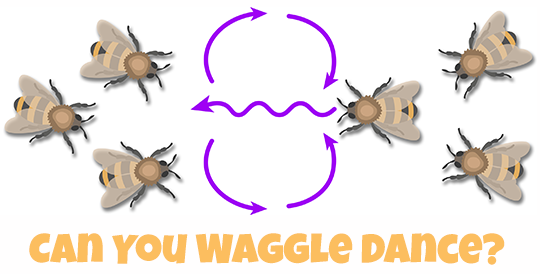
One of the most well-known methods of communication among bees is the waggle dance. This dance is performed by worker bees inside the hive to indicate the location of a food source. The dancing bee uses a combination of movements and vibrations to convey information about the direction and distance of the food source relative to the position of the sun.
During the dance, the bee moves in a figure-eight pattern, waggling its abdomen from side to side. The angle of the dance relative to the vertical honeycomb indicates the direction of the food source. The duration of the waggle phase corresponds to the distance. Other worker bees closely observe the dance and interpret the information provided to navigate to the food source.
This remarkable form of communication allows bees to share valuable information about the location of food and efficiently allocate their foraging efforts. It demonstrates the sophisticated abilities of these tiny insects and their remarkable social organization.
2. Chemical Messages
In addition to the waggle dance, bees also rely on chemical messages, or pheromones, to communicate with each other. Pheromones are chemical substances produced by an individual that can influence the behavior or physiology of other individuals of the same species.
One important pheromone used by bees is the queen mandibular pheromone (QMP). The queen bee secretes this pheromone to communicate her presence and reproductive status to the rest of the colony. It helps maintain the social hierarchy and coordination of the colony. If the queen is injured or lost, the absence of QMP triggers a series of reactions within the colony, leading to the production of new queens or the replacement of the existing queen.
Bees also use alarm pheromones to signal danger. When a bee is threatened or injured, it releases an alarm pheromone that alerts other bees in the vicinity to the potential threat. This prompts the other bees to take defensive actions, such as stinging the intruder or reinforcing the hive’s defenses.
3. Vibrations and Buzzing
In addition to visual signals and chemical messages, bees also rely on vibrations and buzzing sounds to communicate important information within the hive. For example, when the colony is preparing to swarm, a swarm signal is transmitted through rapid wing vibrations. This signal prompts the bees to gather and prepare for the upcoming swarm.
Bees also communicate using different types of buzzing sounds to maintain colony cohesion. The sound produced by a returning forager bee communicates its presence to the guard bees stationed at the entrance of the hive. The unique buzzing sound of the returning bee triggers the guard bees to allow it access to the hive while keeping out intruders.
Additionally, bees produce specific buzzing vibrations during the queen’s mating flights. These vibrations help guide the queen back to the hive and inform the other bees of her successful mating and imminent return.
Overall, bees have evolved an intricate system of communication that combines dance, chemical messages, and vibrations. This complex network of communication enables bees to coordinate their activities and successfully navigate their environment. The study of bee communication offers valuable insights into the fascinating world of social insects and serves as a reminder of the extraordinary abilities found in nature.
The Importance of Bee Communication for Pollination
Bee communication is not only vital for the survival of the colony, but it also plays a crucial role in the pollination of flowers and the reproduction of many plant species. Bees are considered one of the most important pollinators in nature, facilitating the transfer of pollen from the male reproductive organs (anthers) of a flower to the female reproductive organs (stigma) of another flower.
When bees visit flowers in search of nectar and pollen, they inadvertently pick up pollen grains on their bodies. As they move from flower to flower, some of the pollen is deposited onto the stigmas, allowing for fertilization and the production of seeds and fruits.
The communication abilities of bees contribute to efficient and effective pollination. When bees communicate the location of a food source through waggle dances, they inadvertently spread the word about the presence of flowers and the availability of pollen and nectar. This attracts more bees to the area, increasing the chances of successful pollination.
Furthermore, bees have developed a keen sense of color and can differentiate between various flower species based on their visual cues. This enables them to selectively visit flowers that offer higher rewards, ensuring efficient pollination and resource utilization.
The decline of bee populations and the loss of their communication abilities pose a significant threat to the pollination process and, consequently, the ecosystem as a whole. Understanding and protecting the communication methods of bees are critical to safeguarding their role as pollinators and maintaining a healthy and diverse natural environment.
How Do Bees Navigate Through Their Environment?
In order to effectively communicate and forage for food, bees must possess a strong navigational ability. They need to be able to navigate through their environment, locate food sources, and return safely back to the hive. How do bees accomplish this impressive feat? Let’s delve into the fascinating world of bee navigation.
1. Celestial Navigation
Bees possess an extraordinary ability to navigate using celestial cues. They have a keen sense of the position of the sun and can use it as a reference point to determine their direction. By measuring the angle between the sun and their desired destination, bees can accurately navigate even on cloudy days when the sun is not directly visible.
Interestingly, bees can also perceive polarized light, which is light that has been scattered in a specific direction. They use this polarized light to orient themselves and maintain a stable flight path. This ability is particularly useful when the sun is not visible, such as during overcast days or when navigating in dense vegetation.
2. Landmarks and Learned Routes
Bees are also capable of recognizing and memorizing landmarks in their environment. They use prominent visual cues, such as distinctive patterns, colors, or shapes, to navigate through their surroundings. By associating these landmarks with the location of their hive or a food source, bees can create mental maps and navigate with precision.
In addition to landmarks, bees rely on learned routes to guide their way. When a forager bee discovers a new food source, it memorizes the route and landmarks along the way. It then communicates this information to other bees through the waggle dance, allowing them to follow the same path to the food source.
This ability to communicate and share information about specific routes is crucial for efficient foraging and resource allocation within the colony. It minimizes the amount of time and energy spent exploring new areas and maximizes the utilization of known and reliable food sources.
3. Magnetic Field Detection
Another fascinating aspect of bee navigation is their ability to detect and utilize the Earth’s magnetic field. Bees possess tiny magnetic particles in their bodies that allow them to sense and orient themselves with the Earth’s magnetic field lines.
By using this internal magnetic compass, bees can determine their heading regardless of the position of the sun. This is particularly useful during cloudy or rainy days when celestial cues are not readily available.
The magnetic field detection is believed to be an important backup system that complements other navigation mechanisms, ensuring bees can navigate accurately and efficiently in various weather conditions.
In conclusion, bees have evolved a remarkable set of navigational skills to successfully explore and navigate their environment. Their ability to use celestial cues, recognize landmarks, and utilize the Earth’s magnetic field enables them to find food sources, communicate this information within the colony, and ultimately contribute to the pollination of plants. Understanding and preserving these navigation abilities is crucial for the conservation of bees and the vital ecological services they provide.
Key Takeaways: How do bees communicate with each other?
- Bees communicate through a dance known as the waggle dance, where they communicate the direction and distance of food sources.
- They also use pheromones to send specific messages to other bees, such as marking food sources or alarming others of danger.
- Bees can recognize different individuals by their unique odor, allowing them to communicate with specific bees.
- They pass on information by touching each other with their antennae, transferring signals that convey specific messages.
- Communication among bees is essential for the survival and success of the entire colony.
Frequently Asked Questions
In the world of bees, communication is essential for their survival. They have developed intricate ways of conveying information to their fellow bees. Here are some frequently asked questions about how bees communicate with each other:
1. How do bees share information about a food source?
Bees use a special form of communication called the “waggle dance” to share information about a food source. When a bee discovers a good nectar or pollen source, it returns to the hive and performs a dance. By waggling its body and moving in a specific pattern, the bee is able to communicate the location, direction, and quality of the food source to other bees. The waggle dance is like a map and a dance routine combined!
Through the duration and angle of their waggle dance, bees can provide precise information to help other bees navigate to the food source. They can even adjust the dance based on the distance of the food source from the hive. It’s an impressive way for bees to communicate and coordinate their foraging efforts!
2. How do bees communicate important messages in the hive?
Inside the hive, bees rely on a complex system of pheromones to communicate with each other. Pheromones are chemicals that insects use to send signals to others of the same species. Bees produce various pheromones, each serving a different purpose.
For example, the queen bee releases a pheromone called “queen substance” to maintain harmony in the hive. This chemical signals to the worker bees that the queen is present and in good health. Other pheromones are used to mark specific areas of the hive, or to communicate the need for more worker bees, drones, or additional hive defenses. These pheromones allow bees to transmit important messages without using traditional forms of sound or visual cues.
3. How do bees communicate danger and warn the colony?
When bees encounter a threat or danger, they have a way of warning the rest of the colony. They release a pheromone called an “alarm pheromone,” which alerts the other bees to the presence of a potential threat. This alarm pheromone can spread rapidly throughout the hive, triggering a response from the other bees.
Upon detecting the alarm pheromone, worker bees may become more defensive, preparing to protect the hive from the danger. They may also emit buzzing sounds to communicate the urgency of the situation to their fellow bees. By working together, the bees are able to defend their colony from predators or other threats.
4. How do bees communicate the need for a new queen?
In a bee colony, if the queen becomes old or weak, the worker bees will communicate the need for a new queen. They do this by creating a unique sound called “piping.” Piping is a high-pitched hum that the workers make by vibrating their wing muscles. This sound signals to the other bees that it’s time to raise a new queen.
In response to the piping sound, the worker bees will start to build special large cells, known as queen cells, in which the new queen will develop. This incredible form of communication allows the bees to maintain the health and vitality of their colony for generations to come.
5. How do bees communicate with each other during a swarm?
During a swarm, when a new colony is formed, bees have a unique way of communicating with each other to ensure a smooth transition. The queen bee leads the swarm, and the worker bees follow her, creating a cloud-like cluster of bees in the air. But how do they all know where to go?
Well, bees communicate through a process called “group decision-making.” They send out scout bees to search for suitable locations to establish the new colony. The scout bees then return to the swarm and communicate their findings through waggle dances and buzzing sounds. Other bees in the swarm observe and interpret these signals, and together, the bees reach a consensus on the best nesting site. It’s a collaborative effort that showcases the incredible communication skills and collective intelligence of bees.
Figure 8 Dance – How do bees communicate?
Summary
Bees have an amazing way of communicating with each other. They use dance to tell others where to find food. Bees also release chemicals called pheromones to send messages and guide their colony. We can learn a lot from these incredible insects about teamwork and communication. So next time you see a bee buzzing around, remember how important their language is to their survival.
 BeekeepingNET
Leave a comment