What is the process of honey extraction? Well, honey extraction is like a sweet adventure that takes us from the beehive to the jar. So, buckle up and let’s dive into the fascinating world of honey production!
First off, imagine a busy beehive bustling with bees working together to collect nectar from flowers. These incredible insects visit one flower after another, sipping on the sweet nectar and storing it in their honey stomachs. Once their stomachs are full, they return to the hive.
Now, here comes the exciting part! The beekeeper carefully removes the honey-filled frames from the beehive. These frames are like honeycombs, filled with hexagonal cells made of beeswax. To extract the honey, the beekeeper uses a special tool called an uncapping knife to remove the beeswax caps from the cells, revealing the golden treasure within.
So, are you ready to learn more about the enchanting process of honey extraction? Let’s explore the world of bees, honeycombs, and the sweet liquid gold we call honey!
The Process of Honey Extraction: A Sweet Journey from Hive to Jar
In the world of beekeeping, honey extraction is a fascinating and essential process that allows beekeepers to harvest the golden nectar produced by these industrious insects. From carefully removing the honeycomb frames from the hive to the final steps of filtering and bottling, honey extraction requires skill, patience, and an understanding of bees’ remarkable work. In this article, we will take a closer look at the intricacies of honey extraction, exploring each step in detail and shedding light on the magic that occurs within the hive.
The Hive: Where the Honey Journey Begins
A beehive is the bustling home of thousands of bees and their intricate honeycomb structures. The honeycombs serve as both nurseries for bee larvae and storage units for pollen and honey. The honey is stored in hexagonal cells, carefully sealed with a wax capping. When it’s time to extract honey, beekeepers must first ensure that the bees are well-prepared for the process. This involves checking the hive’s overall health, monitoring the honey production, and assessing if the bees have enough surplus honey to spare.
Once the hive is ready, beekeepers will begin the extraction process by carefully removing the frames filled with honeycomb from the hive. It’s crucial to handle the frames with care to avoid damaging the delicate honeycombs and upsetting the bees. To do this, beekeepers often use specialized tools such as a bee brush or a smoker, which helps calm the bees. The frames are then taken to an extraction area, ready to embark on the next step of their journey.
The Extraction: Turning Honeycomb into Liquid Gold
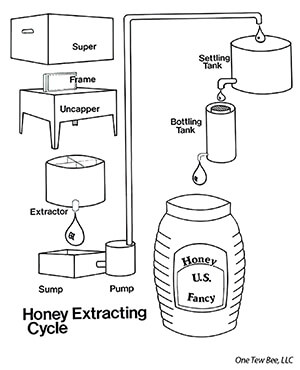
With the honeycomb frames now in the extraction area, the process of transforming the honeycomb into liquid honey begins. The first step is to uncloak the cells by removing the wax cappings. This can be done using a hot knife or a mechanical uncapper. As the cappings are gingerly removed, the pure, unspoiled honey is revealed, glistening like liquid gold. The wax cappings can also be collected and later used for various purposes, such as making candles or skincare products.
Once the cells are uncapped, the frames are placed in an extraction device, usually a centrifugal extractor. The extractor spins the frames, using centrifugal force to extract the honey from the combs. The honey slowly starts to ooze out of the cells and collects at the bottom of the extractor. As the spinning continues, the honey flows out of the extractor and is collected in a container, ready for the next stage of the process.
The Filtering and Bottling: The Final Touches of the Honey Extraction Process
After the honey has been extracted from the combs, it needs to undergo a filtering process to remove any impurities or unwanted particles. Filtering helps ensure that the honey is smooth and free of debris, providing a high-quality product for consumers. The honey is typically passed through a mesh or a fine cloth filter, allowing only the pure honey to pass through while retaining any solids or impurities.
Once the honey is filtered, it is ready to be bottled. Beekeepers carefully pour the honey into clean, sterilized jars, ensuring that the jars are filled to the appropriate level and sealed tightly. Some beekeepers may choose to add labels or customize the jars to give them a personal touch. Finally, the jars are stored in a cool, dark place, where the honey can maintain its freshness and flavor until it is enjoyed by honey lovers around the world.
With the honey extraction process complete, beekeepers can take pride in the fruits of their labor and the remarkable work of their bees. From the hive to the jar, the journey of honey is a testament to the intricate symbiosis between bees and humans. So the next time you enjoy a spoonful of honey, take a moment to appreciate the incredible process it underwent, from the buzzing hive to your pantry shelf.
Key Takeaways: What is the process of honey extraction?
- The process of honey extraction involves removing honey from honeycombs
- First, the beekeeper uses a smoker to calm the bees
- Then, the frames with honeycombs are carefully removed from the beehive
- The honey is extracted by spinning the frames in a centrifuge
- Finally, the extracted honey is filtered and bottled for consumption
Frequently Asked Questions
Are you curious about the fascinating process of honey extraction? Here are some commonly asked questions to satisfy your curiosity!
1. How is honey extracted from beehives?
The process of honey extraction begins with beekeepers carefully removing honey-filled frames from the beehives. These frames are then transported to a processing facility or extraction room. The honeycomb cells are uncapped using a special tool, exposing the honey.
Next, the frames are placed in an extractor, which uses centrifugal force to spin the frames rapidly. As the honeycomb cells spin, the honey is forced out and collects at the bottom of the extractor. It is then drained out through a valve and filtered to remove any impurities.
2. How do beekeepers ensure the safety of the bees during extraction?
Beekeepers prioritize the safety and well-being of their bees during the honey extraction process. They take several precautions, such as wearing protective clothing like bee suits and veils to minimize disturbances to the bees.
Additionally, beekeepers use specialized tools and techniques to gently remove the frames from the beehives, ensuring minimal disruption to the hive’s structure. They handle the frames with care to prevent harm to the bees and return them back to the hive as soon as possible after extraction.
3. What happens to the honeycomb after extraction?
After the honey has been extracted, the beekeepers return the empty honeycomb frames to the beehives. The bees then clean and repair the honeycomb by removing any leftover honey and sealing the empty cells with beeswax.
This process allows the bees to reuse the honeycomb, saving them time and energy. The bees will continue to build upon the existing honeycomb, storing more honey and raising their young.
4. How is raw honey different from processed honey?
Raw honey is directly extracted from the beehives and undergoes minimal processing. It is not heated or pasteurized, ensuring that it retains its natural enzymes, antioxidants, and nutrients. Raw honey may have a cloudy appearance and contain tiny particles of beeswax and pollen.
In contrast, processed honey undergoes filtration, heating, and pasteurization to remove impurities, extend shelf life, and achieve a smooth, clear texture. However, these processes may also eliminate some of the beneficial compounds present in raw honey.
5. Can you extract honey without harming the bees?
Yes, it is possible to extract honey without causing harm to the bees. Modern beekeeping techniques prioritize the well-being of the bees, ensuring that the extraction process is gentle and minimally disruptive.
Beekeepers use techniques like smoke calming, which involves introducing a small amount of smoke near the hive entrance. This helps to calm the bees and encourages them to return to the hive, making honey extraction safer for both the bees and the beekeeper.
Harvesting Honey | How to harvest honey from a beehive
Summary
So, to sum it all up, honey extraction is the process of getting honey from beehives. First, the beekeeper removes the frames filled with honeycombs from the beehive. Then, they use a special tool called a uncapping knife or fork to remove the wax caps from the honeycomb cells. Next, the frames are placed in a honey extractor, which spins them around to extract the honey. The honey is then filtered to remove any impurities and poured into jars for storage. Finally, the beekeeper returns the frames to the beehive for the bees to refill with honey.
In conclusion, honey extraction is an important and fascinating process that allows us to enjoy the delicious and sweet honey made by bees. It requires careful handling and the right tools, but it’s worth it to savor the golden goodness that bees work so hard to create!
 BeekeepingNET
Leave a comment