Have you ever wondered what the purpose of bee dances is? It turns out that bees have a secret language to communicate with each other. These tiny creatures perform intricate dances to convey important information to their fellow hive members. So, whether you’re a curious nature enthusiast or just interested in learning something new, this article will uncover the fascinating world of bee dances and their purpose.
Bees are not just hardworking pollinators; they are also incredible communicators. Through a series of specific movements and patterns, they can relay vital information about the location of nectar and pollen sources. Imagine if you could communicate with your friends by dancing – that would be pretty cool, right? Well, for bees, it’s a common practice that has helped them survive for millions of years.
But why do bees dance in the first place? The primary purpose of these dances is to guide other bees in locating food. By wiggling, twirling, and buzzing, the dancing bee creates a visual and vibrational map that tells her hive mates the distance, direction, and quality of the food source. It’s like a mini GPS system tailored for bees! So, if you’re eager to discover more about the incredible world of bee dances, keep reading to unravel their secrets.
In this article, we’ll delve into the different types of bee dances, such as the famous waggle dance and circle dance, and explore how they help bees communicate effectively. We’ll also discuss the amazing abilities of bees and their role in maintaining a healthy ecosystem. So, get ready to enter the mesmerizing realm of bee dances and experience the wonder of nature’s little buzz-worthy choreography. Let’s dive in!
The Purpose of Bee Dances: Unveiling the Secrets of Communication in the Hive
Bee dances are a fascinating form of communication that plays a crucial role in the social structure and survival of bee colonies. Bees use a variety of dances to convey important information to their fellow hive members, including the location of food sources, the distance to these sources, and even the quality of the food they have found. Understanding the purpose of bee dances not only sheds light on the complexity of insect communication but also provides valuable insights into the behavior and organization of these incredible creatures.
Different Types of Bee Dances and Their Significance
1. The Round Dance: The round dance is a simple yet effective form of communication employed by worker bees to indicate the presence of food sources nearby. This dance involves the bee rapidly circling around one spot, changing direction randomly. Through physical contact with other bees in the hive, she transfers information about the location and general direction of the food source. The bees that receive this information will then leave the hive in search of the food, often relying on their innate navigational skills to find it.
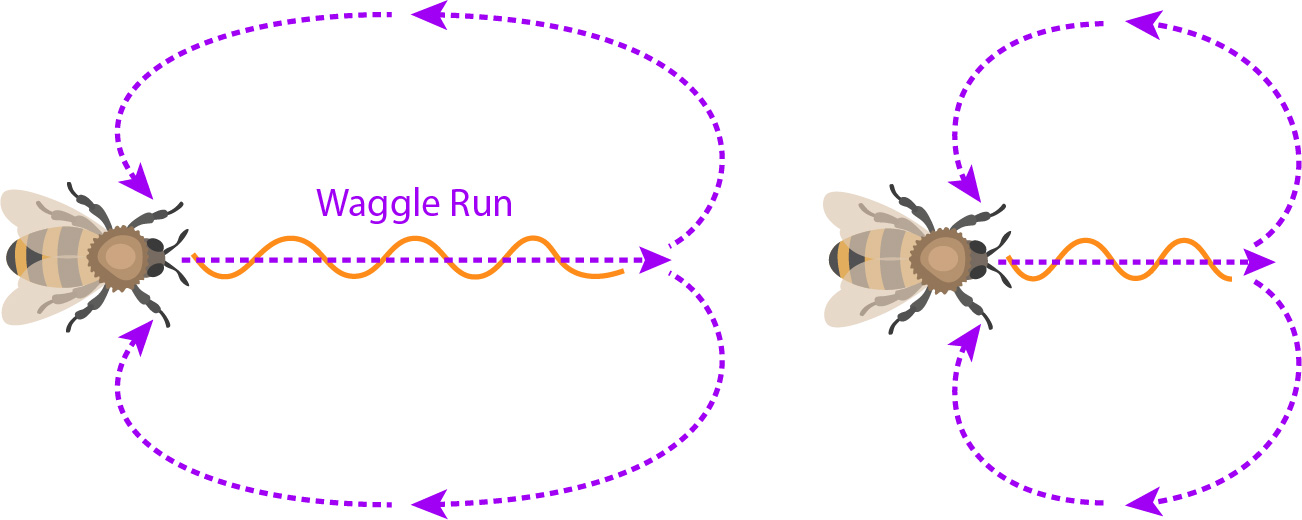
2. The Waggle Dance: Considered the most complex and sophisticated form of bee dance, the waggle dance is performed by forager bees to communicate the precise distance, direction, and quality of food sources. This dance involves a series of figure-eight movements, with a specific section known as the “waggle run.” By varying the duration and angle of the waggle run in relation to the vertical position of the honeycomb, the dancing bee provides detailed information about the distance and direction of the food source. The quality of the food is indicated by the vigor and intensity of the waggle dance.
3. The Shaking Dance: Although less well-known, the shaking dance is equally important in the hive’s communication network. This dance is usually performed when a successful forager returns to the hive but is unable to find a vacant spot for unloading the collected nectar or pollen. The bee will perform a series of vibratory movements while clinging onto another bee, which serves as an invitation for the other bee to empty its contents and make space for the returning forager. The shaking dance ensures efficient resource collection and prevents congestion in the hive.
The Round Dance: Guiding the Hive Towards Local Food Sources
The round dance is a short, circular dance performed by worker bees to indicate the presence of food sources in close proximity to the hive. The dancer bee rapidly moves in a circular pattern, alternating between clockwise and counterclockwise directions. This dance is often accompanied by a pheromone release from the dancer bee’s abdomen, which serves to attract other bees to the food scent and encourage them to join the foraging effort.
Through physical contact with other bees in the hive, the dancer bee transfers information about the location and general direction of the food source. The duration and intensity of the dance communicate the quality and abundance of the food. Bees that receive this information will then leave the hive in search of the food, often relying on their innate navigational skills and odor cues to locate the precise food source.
The round dance is particularly effective for guiding the hive towards local food sources that are within 100 meters of the hive. Since the information provided by the dance is not precise in terms of distance or direction, the scouts that are attracted to the dance must rely on their own sensory cues to locate the food source accurately. Despite its simplicity, the round dance plays a vital role in coordinating the foraging efforts of the hive and ensuring a steady supply of resources.
The Waggle Dance: A Precise Map to Distant Food Sources
The waggle dance is a complex and intricate form of communication employed by forager bees to guide their fellow hive members to distant food sources. This dance, consisting of a series of figure-eight movements, conveys precise information about the distance, direction, and quality of the food. The fascinating aspect of the waggle dance is its ability to provide a cognitive map of the environment for other bees to navigate through.
The dancing bee performs a waggle run, which is a straight segment within the figure-eight pattern, while vigorously vibrating her abdomen. The angle at which the waggle run is performed in relation to the vertical position of the honeycomb indicates the direction of the food source in relation to the sun. For example, if the dance is performed vertically upwards, the food source is in line with the sun. If performed at an angle to the right or left, the direction is relative to the sun.
The duration of the waggle dance represents the distance to the food source in relation to the intensity of the waggle run. The longer the waggle run and the more energetic the dance, the greater the distance to the food. By decoding this information, other worker bees can accurately orient themselves and navigate to the desired food source, even if it is several kilometers away.
The Shaking Dance: Maintaining Order and Efficiency in the Hive
As busy foragers return to the hive laden with nectar or pollen, they occasionally face a challenge: finding an empty spot to deliver their precious cargo. This is where the shaking dance comes into play. By performing a series of quick vibratory movements while clinging onto a recipient bee, the returning forager effectively signals to the other bee that it should unload its contents and make room for the incoming bee.
The shaking dance serves two important purposes in the hive. Firstly, it ensures efficient resource collection by ensuring that each forager bee can promptly unload its collected nectar or pollen. This prevents congestion and delays in the hive, allowing for smooth and uninterrupted foraging activities. Secondly, the shaking dance promotes cooperation and social harmony within the hive, as bees communicate and coordinate their movements to optimize the use of limited hive space.
The shaking dance is an example of the intricate social dynamics in bee colonies, where bees communicate and respond to each other’s needs in a coordinated and efficient manner. By maintaining order and efficiency, the shaking dance contributes to the overall success and survival of the hive.
Key Takeaways: What is the purpose of bee dances?
- Bee dances are a form of communication used by bees to share information about food sources.
- Bees perform different dance patterns to indicate the distance and direction of the food.
- These dances help other bees in the hive locate and collect food efficiently.
- The information conveyed in bee dances is incredibly precise and can even specify the quality of the food source.
- By performing bee dances, bees are able to coordinate their foraging activities and ensure the survival of the entire colony.
Frequently Asked Questions
Welcome to our FAQ section on the purpose of bee dances! Bees are fascinating creatures that communicate with each other through intricate dances. In this section, we’ll explore the reasons behind these dances and their significance in the world of bees.
1. How do bees communicate through dances?
Bees communicate important information such as the location of food sources or potential new hive sites through a dance language known as “the waggle dance.” A worker bee that has discovered a good food source or a potential new home will perform this dance for other bees to convey the location.
During the waggle dance, the bee moves in a figure-eight pattern, waggling its abdomen vigorously. The direction and duration of the dance represent the direction and distance of the target location respectively. By interpreting these movements, other bees can navigate and find the source of food or the new hive site.
2. What is the purpose of the waggle dance?
The waggle dance serves as a powerful tool for foraging bees to communicate crucial information to their sisters. The purpose of the waggle dance is to provide precise instructions about the location of valuable resources, such as nectar, pollen, or water, as well as potential new nest sites.
By dancing, the bee is essentially creating a map for other bees to follow. This helps the colony efficiently exploit resources and make informed decisions on where to establish new hives. The purpose of the waggle dance is to maximize the foraging and reproductive success of the entire bee colony.
3. How do bees interpret the waggle dance?
Bees interpret the waggle dance by analyzing two main aspects: the direction and the distance of the dance. The direction is communicated through the angle the bee makes with respect to the sun’s position. For example, a dance performed straight up signifies that the target is directly facing the sun.
The distance is represented through the duration of the waggle phase. The longer the waggle, the farther the target location is from the hive. Bees also rely on other cues, such as the intensity of the bee’s buzzing sound and experience gained from previous foraging trips, to accurately interpret and follow the instructions provided by the dance.
4. What other types of bee dances are there?
In addition to the waggle dance, bees also perform other types of dances that serve different purposes. The circle dance, for example, is performed to recruit bees for short-distance food sources. This dance involves a circular motion and is used to signal the proximity of the resource.
Another dance called the tremble dance is performed by worker bees to inform the queen about the need for more workers in the hive. This dance involves a shaking motion that conveys a message to the queen and stimulates her to increase egg-laying to meet the colony’s demands. These dances, along with the waggle dance, form a complex communication system within the bee colony.
5. Are bee dances the only way bees communicate?
Bee dances are a remarkable form of communication, but they are not the only way bees exchange information. Bees also communicate through pheromones, which are chemicals released by bees that convey messages to other members of the colony.
Pheromones play a crucial role in various aspects of bee life, such as identifying members of the same colony, marking food sources, and even queen recognition. These chemical signals work in conjunction with the dance language, providing bees with a comprehensive communication system to coordinate and thrive as a unified colony.
The Bee Dance
Summary
Bee dances have a special purpose, and it’s all about communication. Bees use dances to show other bees where to find food. There are two types of dances: the round dance and the waggle dance. The round dance tells other bees that the food is nearby, while the waggle dance gives more specific information like distance and direction. Through these dances, bees help their colony find food and survive together.
But how do bees do these dances? Well, they use their bodies to move in different patterns like circles and figure eights. They also make buzzing sounds to get the attention of other bees. It’s like an elaborate dance routine that tells their friends where the good stuff is. So next time you see bees buzzing around, remember that they’re not just flying randomly – they’re actually talking to each other through their amazing dance moves.
 BeekeepingNET
Leave a comment