Bee dances are an intriguing phenomenon in the world of insects, captivating scientists and nature enthusiasts alike. But what is the significance of these intricate movements? Let’s dive in and explore the hidden secrets behind bee dances.
Did you know that honeybees have a unique way of communicating with each other? Through a series of complex dances, bees can convey vital information about the location of food sources and potential new hive sites. It’s like they have their very own language!
So, why do bees dance? Well, these dances serve as a form of navigation and communication system for the colony. By performing specific movements, bees are able to inform their fellow hive members of the distance, direction, and quality of a food source. It’s like they’re saying, “Hey, there’s a delicious patch of flowers just a short distance away!”
Join me as we unravel the mysteries of bee dances and discover just how significant these tiny movements are in the grand scheme of bee society. Get ready to delve into the fascinating world of these buzzing creatures!
The Significance of Bee Dances: Decoding the Language of Bees
Bees are not just busy pollinators, they are also incredible dancers. Through intricate movements and patterns known as bee dances, these remarkable insects communicate vital information to their fellow hive members. The significance of bee dances goes far beyond mere entertainment; it is an essential means of sharing knowledge and ensuring the survival of the entire colony. In this article, we will explore the fascinating world of bee dances and unravel the secrets behind their significance.
The Waggle Dance: The Marvelous Navigation Tool
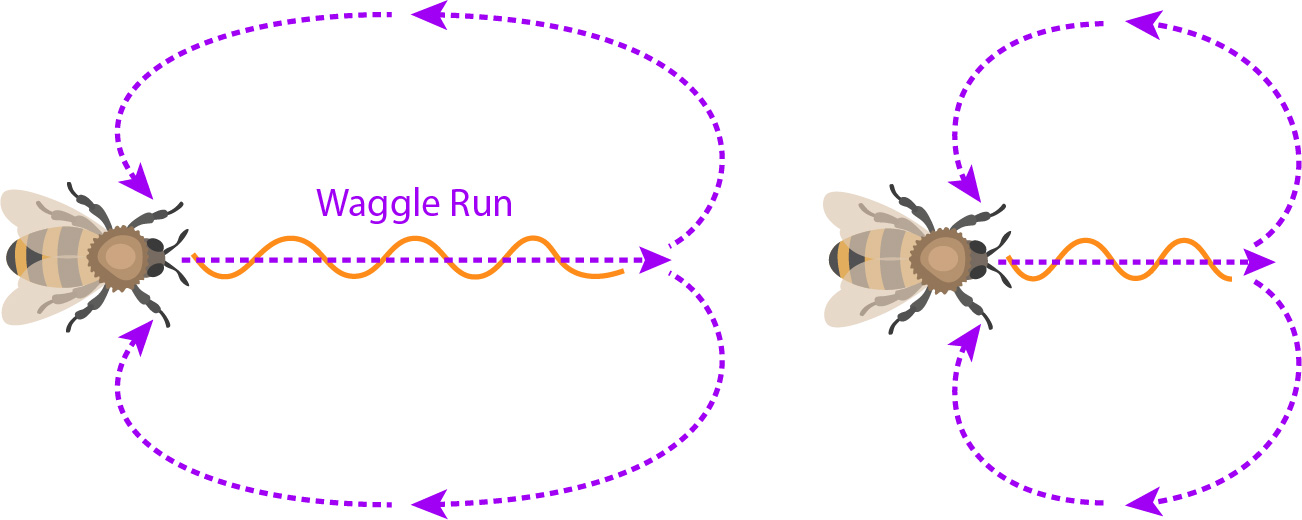
The waggle dance is perhaps the most well-known and intriguing bee dance. It is performed by worker bees to indicate the location of a food source, such as nectar or pollen, to their hive mates. When a successful forager returns to the hive, she performs a figure-eight dance on the honeycomb, wagging her abdomen from side to side. The orientation and duration of the waggle dance provide vital information about the direction, distance, and quality of the food source.
The significance of the waggle dance lies in its ability to convey complex spatial information. Bees use the angle of the waggle run, which represents the direction of the food source in relation to the sun, and the duration of the waggle phase, which indicates the distance. By decoding these dance moves, worker bees can pinpoint the exact location of the food and navigate their way to it. In essence, the waggle dance serves as a remarkable navigation tool, allowing bees to efficiently exploit resources and ensure the survival of the entire colony.
Furthermore, recent research has revealed that the waggle dance is not solely a means of communication but also a democratic decision-making process. When multiple bees perform a waggle dance for different food sources, hive mates evaluate the dances and ultimately choose the most promising option. This collective decision-making ensures optimal resource allocation, further highlighting the significance of bee dances in maintaining the hive’s functionality and success.
The Round Dance: Spreading the Word within the Hive
While the waggle dance is crucial for communicating resources outside the hive, the round dance serves as an important means of communication within the hive. Unlike the waggle dance, which conveys information about distant food sources, the round dance is used to share local information, such as the presence of nearby nectar or pollen. This dance is performed by worker bees on the surface of the honeycomb, where they move in rapid, circular motions.
The significance of the round dance lies in its simplicity and inclusiveness. Bees performing the round dance do not provide precise spatial information like in the waggle dance. Instead, they generate excitement and attract the attention of other workers, encouraging them to search for food in the nearby vicinity. The round dance is an efficient way of quickly spreading the word within the hive and mobilizing the workforce to exploit local resources.
In addition to its role in sharing information about food sources, the round dance can also convey other messages, such as the need for home repairs or the presence of predators. By using distinct variations of the round dance, bees can communicate a wide range of information to their hive mates, ensuring the collective well-being and survival of the entire colony.
The Tremble Dance: Keeping the Queen Informed
While the waggle dance and round dance primarily serve as communication tools among worker bees, the tremble dance is dedicated to keeping the queen informed. This unique dance is performed by worker bees in close proximity to the queen, using small, rapid movements known as thoracic vibrations. These vibrations resonate through the hive, alerting the bees to the queen’s presence and keeping them updated on her condition.
The significance of the tremble dance lies in its role in maintaining the hive’s social organization and ensuring reproductive success. The queen is the central figure in the colony, responsible for laying eggs and keeping the population stable. By performing the tremble dance, worker bees transmit crucial information about the queen’s health and well-being to their hive mates, enabling them to adjust their behavior accordingly.
In addition to conveying information about the queen, the tremble dance also plays a role in temperature regulation within the hive. The rapid movements generate heat, helping to maintain the optimal temperature at the center of the hive where the brood is located. This dance serves as a crucial means of communication and coordination, ensuring the overall health and productivity of the hive.
Key Takeaways: What is the significance of bee dances?
- Bee dances are a way for bees to communicate with each other.
- Bees use different dance moves to convey information about food sources.
- The direction and duration of the dance indicate the location and distance of the food.
- Bees also use dance to communicate information about potential new hive sites.
- These dances are crucial for the survival and success of the entire bee colony.
Frequently Asked Questions
Curious about the significance of bee dances? Here are some common questions and answers to help you understand this fascinating behavior.
Q: How do bees communicate through dances?
A: Bees use dances to communicate important information to their hive mates. The most well-known dance is the waggle dance, which indicates the location of a food source. During this dance, the bee moves in a figure-eight pattern while vibrating its abdomen and producing sound. By analyzing the direction and duration of the dance, as well as the intensity of the sound, other bees can determine the distance, direction, and quality of the food source.
In addition to the waggle dance, bees also perform the round dance. This dance signifies that a food source is nearby, but its location cannot be precisely determined. Instead of indicating direction or distance, the round dance relies on the intensity of the dancer’s movements and odor cues to convey the proximity of the food source. Through these dances, bees are able to efficiently communicate and share information vital for their survival.
Q: What is the purpose of bee dances?
A: The primary purpose of bee dances is to convey important information within the hive. By performing dances, forager bees can inform their hive mates about the location, quality, and availability of food sources. This allows the entire colony to coordinate their foraging efforts and maximize their collective efficiency. The dances enable bees to navigate their complex environment, efficiently gather resources, and support the overall health and productivity of the hive.
Furthermore, bee dances also play a crucial role in the selection of new nest locations. When a swarm of bees needs to find a new home, scout bees search for suitable sites. Once they discover a potential nest location, they return to the swarm and perform a dance known as the swarm dance. This dance communicates the location and desirability of the site, helping the swarm reach a consensus and make an informed decision about their new home.
Q: Do all bee species use dances to communicate?
A: While bee dances are most commonly associated with honeybees, not all bee species use dances as a form of communication. The ability to perform intricate dances for communication purposes is primarily observed in honeybees. Other types of bees, such as bumblebees and solitary bees, rely on different methods to communicate, such as pheromones or specific flight patterns.
Each species of bee has evolved its own unique methods of communication based on its ecological niche and social structure. While honeybees have perfected the art of dancing, other bees have developed alternative strategies to effectively communicate with their colony members or potential mates.
Q: Can humans understand bee dances?
A: While bees have evolved to understand and interpret the messages conveyed through their dances, humans do not possess the innate ability to decipher these complex movements. However, through scientific research and observation, entomologists have been able to study and decode the meaning behind various bee dances.
By carefully observing the movements, duration, and intensity of the dances, as well as analyzing other environmental cues, researchers have been able to uncover the intricate language of the bees. This understanding has provided invaluable insights into bee behavior, ecology, and the remarkable ways in which these tiny creatures communicate with one another.
Q: Can bee dances vary between individual bees?
A: Yes, bee dances can indeed vary between individual bees. While the basic patterns and cues of the dances remain consistent within a species, there can be slight variations in the details and execution of the dances. These variations can be influenced by factors such as the age and experience of the dancer, the quality and proximity of the food source, or even individual preferences.
These variations, however, do not hinder the overall effectiveness of the dances in communicating vital information. The ability of bees to interpret and understand these variations is a testament to their remarkable adaptation and collective intelligence as a superorganism.
The Bee Dance
Summary:
Bees communicate through dances to tell their hive-mates where to find food. The round dance means food is nearby, while the waggle dance gives directions to distant food sources. This helps the colony survive and thrive.
By watching and listening to their fellow bees, scientists can decode the intricate language of the bee dances. This knowledge helps us understand the behavior and needs of these important pollinators, and ultimately, how to protect them and their vital role in our ecosystems.
 BeekeepingNET
Leave a comment